

Ask most people what's missing from a room that doesn't quite feel right and they'll point to the furniture, the colour on the walls or the rug that doesn't sit quite straight.
Rarely will anyone say the lighting, even though, in most cases, lighting is exactly the problem.
Overhead lighting flattens a room. It distributes light evenly across every surface, which sounds logical but in practice creates something that feels more like a waiting room than a home.
Table lamps do the opposite: they pool light, create warmth and give a room its atmosphere. They're also one of the most flexible design tools available because they can be moved, swapped out and layered without a single tool.
Here's how to use them well, room by room
Featured collection



In the living room: Build layers

The living room is where lighting earns its keep most obviously; it has to perform across very different moments, from a bright Sunday morning to a quiet evening in.
A single overhead fitting cannot do all of that.
Table lamps can.
The key is layering. A lamp on each side of the sofa, a floor lamp in a corner and perhaps an accent piece on a console.
Each light source operates at a different height and creates a different quality of light and together they give you the ability to set the tone of the room for any occasion simply by switching different combinations on or off.
The Arcadia Table Lamp in amber glass is a natural choice for a side table or console in a living room. Its warm golden glow is specifically suited to evening use. It adds colour as well as light and the amber glass base catches and refracts the bulb's warmth in a way that plain ceramic or fabric bases simply don't.
Paired with the Arcadia Floor Lamp in the same amber glass family, it creates a cohesive glow that feels composed rather than coincidental.
For a room that needs a bolder lighting statement, the Floor Lamp Atomic Balls in gold with glass globes earns its place as sculpture as much as lighting. Its branching metal structure and cluster of glass orbs catch the light at multiple points, making it a focal piece even when switched off. It's available in silver with smoke glass globes for rooms where the palette runs cooler and more contemporary.
A sofa like the Tobago 4-Seat Sofa in beige benefits enormously from this kind of layered approach. The neutral upholstery absorbs warm lamplight beautifully and creates a living room that feels genuinely inviting rather than simply furnished.
In the bedroom: Light for different tasks

Bedroom lighting is almost always underplanned.
A ceiling light goes in, a pendant is sometimes added and the nightstand lamp is an afterthought.
The result is a room that's well lit for putting laundry away but not particularly restful for anything else.
The nightstand lamp is one of the most used and least considered items in a bedroom.
It needs to be bright enough to read by without being so harsh it disturbs sleep and it should sit at a height that doesn't direct light straight into your eyes when you're lying down.
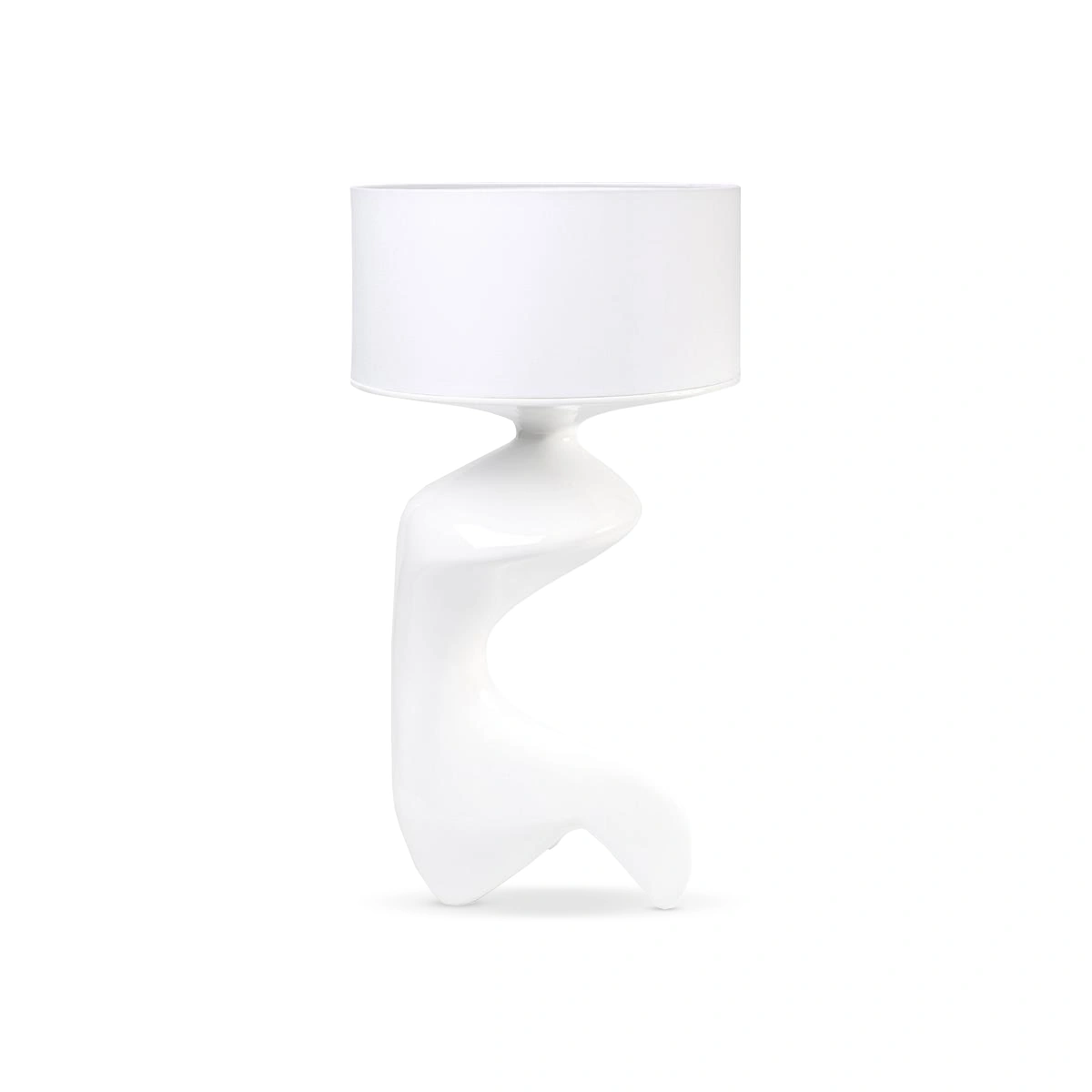
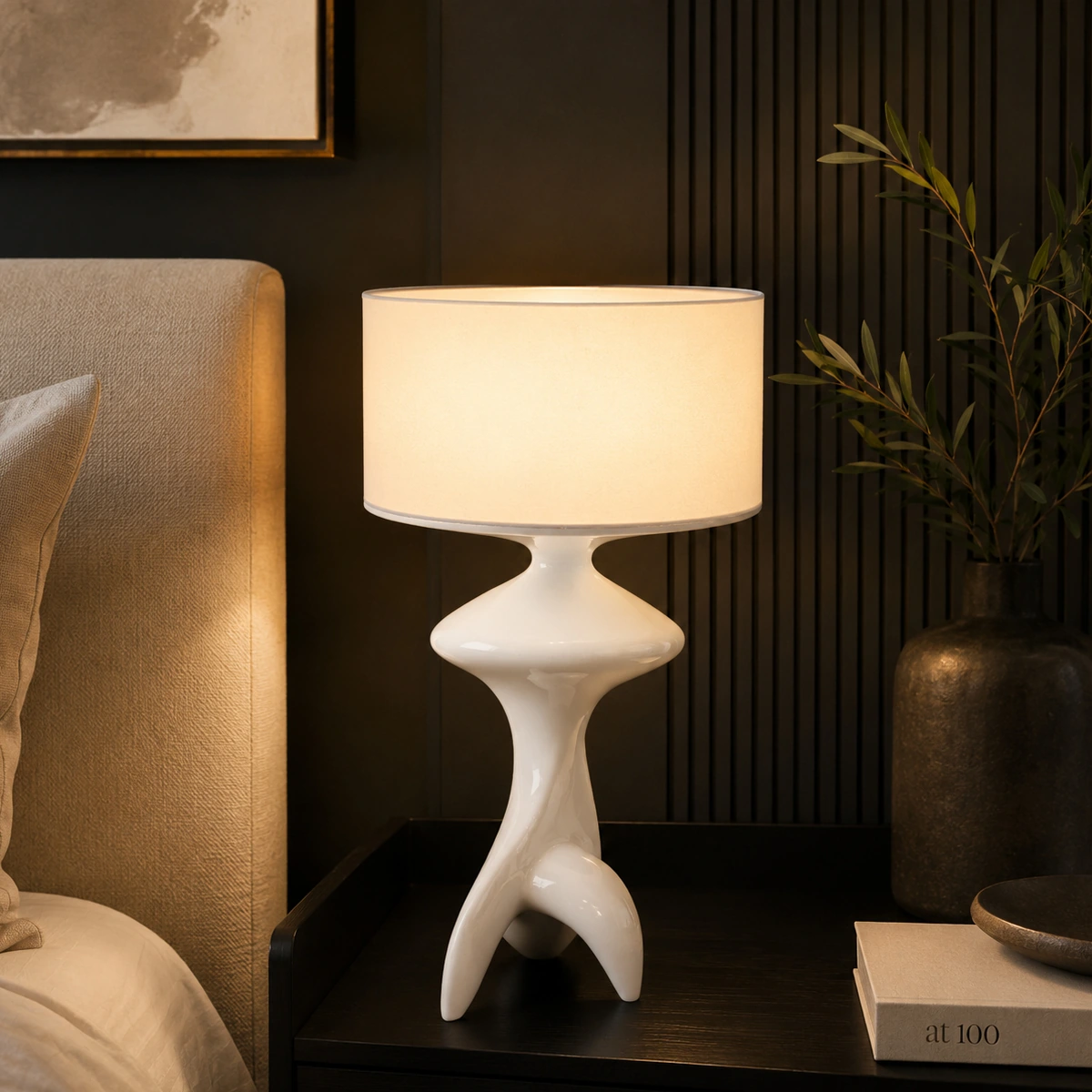
The Erosia Table Lamp in white polyester with a clean, structured form is a well-proportioned bedside piece. Its height and diffused shade give soft, directional light that works for reading without flooding the room. It's quiet enough in its design to complement a range of bedroom aesthetics and confident enough not to disappear against the wall.
The Livorno Dresser in natural oak makes an ideal surface for a dressing table lamp. Its compact footprint fits comfortably in most bedrooms and its warm wood finish pairs naturally with both the white tone of the Erosia and the amber warmth of the Arcadia. Dressing table lighting is a detail that's easy to overlook, but a well-lit surface for getting ready in the morning is something you'll notice every single day.
In the dining room: Ambient over overhead

The dining room is the space where overhead lighting most often lets people down.
A bright ceiling fitting over a dining table tends to feel institutional. It creates too much contrast between the lit table and the darker edges of the room.
A table lamp on a sideboard or console adjacent to the dining area introduces a secondary light source at a lower level, which softens the room and makes the overall lighting feel more considered.
It also means that when overhead lights are dimmed, the room doesn't go dark, it settles.
The Table Lamp Balance Circle, with its black minimal metal frame, is particularly well-suited to a dining room sideboard. It's slender enough not to compete with display objects or tableware and its graphic, sculptural quality works alongside the kind of design-forward dining pieces like the Ripple Round Dining Table in white Banswara marble, where the materiality of the table itself is already doing strong visual work.
When the lamp is the point

Some table lamps are less about illumination and more about intention.
They're pieces that happen to produce light but whose primary value is the character they bring to the surface.
The Table Lamp Graffiti Dog, with its multicoloured resin sculpture base, is exactly this kind of piece. It's playful, pop-inflected and genuinely fun and it transforms any surface it sits on, from a table with a lamp on it into a considered moment in a room.
Similarly, the Table Lamp Octopus in black resin brings a sculptural, slightly surreal quality to a shelf or side table, the kind of detail that guests always notice.
A final thought on lamps
The best-lit rooms are never the brightest ones.
They're the ones where light has been placed with intention, where the warmth falls in the right places, where the shadows are part of the composition and where the overall effect is a room that feels genuinely pleasant to be in.
A well-chosen table lamp is one of the most straightforward ways to get there.


